Every listing description for waterfront property in Kingsland eventually says the same thing: Lake LBJ is a constant-level lake. It shows up in agent bios, marina brochures, and the first paragraph of most buyer guides. The Lower Colorado River Authority, which actually manages the water, describes it differently. LCRA calls Lake LBJ a pass-through lake, and its public FAQ states plainly that the authority periodically lowers it on purpose.
That gap between the marketing phrase and the regulatory language is not a technicality. It changes what a buyer should actually be checking before writing an offer on the water.
What "Pass-Through" Actually Means
Lake LBJ sits in the Highland Lakes chain, downstream from Lake Buchanan, which functions as the system's main storage reservoir. Water moves through LBJ rather than being held and drawn down the way Buchanan and Travis are during drought. That structural position is why LBJ's waterline holds steadier than its upstream neighbors, and it's a real advantage. As of late July 2026, USGS gauge data near Marble Falls showed the lake sitting right around its normal operating elevation of roughly 825 feet, which is where it tends to stay in a typical year.
Steadier is not the same as fixed. The distinction matters because "constant" implies nothing ever changes, and that's not what LCRA's own rules describe.
The Lowering Nobody Puts in the Listing
LCRA's frequently asked questions page addresses this directly. The authority states it occasionally lowers pass-through lakes, LBJ among them, to combat nuisance aquatic vegetation and open a window for owners to handle dock and retaining wall repairs. This is a planned maintenance tool, used on a schedule LCRA controls, not a symptom of drought stress.
That's actually good news for anyone buying on the lake. A planned, periodic drawdown is far more predictable than the emergency operations that hit storage lakes during dry years. But it also means a fixed dock built with zero tolerance for any change in water level is built for a lake that doesn't quite exist. The lake it's built for shows up on marketing pages. The lake it actually sits on has a maintenance cycle.
Why This Still Beats Lake Travis or Lake Buchanan
None of this erases the real advantage LBJ has over its upstream neighbors. Lake Travis and Lake Buchanan absorb the brunt of Central Texas drought because they're the system's water-supply reservoirs, and LCRA's own materials note that all of the Highland Lakes fluctuate, Travis and Buchanan most of all. LBJ's pass-through design insulates it from most of that volatility, which is exactly why fixed docks, permanent boathouses, and lakeside landscaping tend to hold up better here than on Buchanan or Travis. The premium buyers pay for LBJ waterfront reflects that real, structural difference. It just isn't the same thing as a guarantee that the waterline never moves.
The Real Risk Sits Below the Waterline
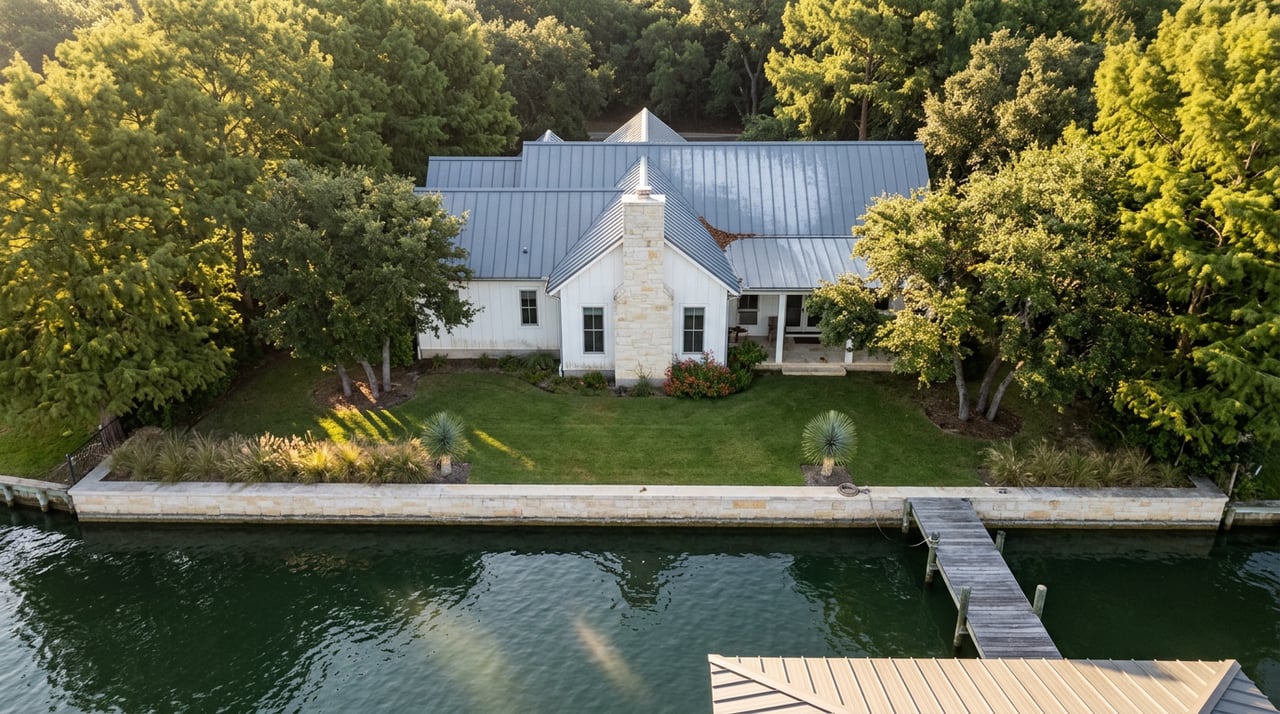
A standard home inspection stops at the shoreline. It does not evaluate the dock, the boathouse, the lift, or the bulkhead, which means a buyer relying only on a general inspector can close on a waterfront home without ever having the one structure most likely to produce a surprise bill actually looked at by someone qualified to judge it.
Bulkhead condition is where the money hides. Replacement runs anywhere from $40,000 to $150,000 depending on age and construction, whether it's concrete, steel, or riprap, and a bulkhead that looks fine from the yard can be cracked or eroding behind the visible face. A new dock, if you're starting from scratch, is its own multi-month project once you count LCRA documentation, material sourcing, and construction. None of that shows up in a standard disclosure the way a foundation crack or a roof leak does. It shows up when a marine contractor gets underneath the structure.
Four Layers of Permission Before You Touch the Shoreline
LCRA does not require a permit or fee for a residential dock of 1,500 square feet or less, but that exemption only covers the paperwork. Every dock on the Highland Lakes, regardless of size, still has to meet LCRA's safety standards for flotation, lighting, anchoring, and distance from shore. Skipping the permit does not mean skipping the rules.
On top of that baseline, local jurisdiction adds its own layer, and it's not the same layer everywhere on the lake:
- In Horseshoe Bay, the Architectural Committee has to approve any shoreline work before soil or vegetation is disturbed, and only after that does the City of Horseshoe Bay issue the actual building permit.
- In Kingsland and the unincorporated stretches of Llano County, the requirements run through the county rather than a city architectural board, and they can differ meaningfully from what applies a few miles away in Horseshoe Bay.
- In Highland Haven, city code treats a dock, seawall, or bulkhead as major waterfront construction requiring its own permit review and survey, separate from anything LCRA requires.
- HOAs and POAs common throughout the Highland Lakes region layer on their own design standards and approval timelines on top of whichever government layer already applies.
A dock design that satisfies an HOA can still run into a county setback rule it never anticipated. Owning lakefront property doesn't automatically come with the right to build on the water either. LCRA is explicit that the submerged land itself may belong to someone else, which is a deed question, not a lake question, and worth confirming before assuming a dock project is even yours to build.
What the Median Price Doesn't Tell You Right Now
Kingsland's own numbers make the case for reading past the headline figure. One recent snapshot put the average active listing price across roughly 330 Kingsland properties near $851,000 as of late July 2026. A separate read on closed sales for July 2026 showed a median sale price of $950,000, up over 300 percent year over year, with price per square foot up more than 90 percent over the same period.
That kind of swing doesn't mean Kingsland values tripled in a year. In a market where homes typically sit for around 110 days and sell close to 5 percent under list, a single month of closings can be dominated by whichever handful of properties happened to change hands, luxury or entry-level. The active listings tell a steadier story: a two-bedroom, two-bath home near 2,700 square feet listed around $779,000, and a five-bedroom near 4,000 square feet listed above $3.2 million, both under the same "waterfront" label on the same lake.
That spread is the point. "Waterfront" on Lake LBJ covers open main-body lots with big views and steady boat traffic, protected canal lots with deep water at the dock, and quieter cove lots tucked into inlets like the ones near Kingsland's stretch of the Colorado Arm. Each behaves differently on price and on maintenance needs, which is exactly why a single median number flattens more than it reveals.
| Area | Typical waterfront price band | What defines the water |
|---|---|---|
| Kingsland | $400K to $5M | Sits at the confluence of the Colorado and Llano rivers, mixing older cottages with newer construction |
| Horseshoe Bay and Applehead Island | Mostly above $1.5M, with estates past $10M | Gated canals and man-made channels, the most protected water on the lake |
| Granite Shoals | $500K to $2M | Some of the most accessible open shoreline on the lake, with short-term rentals permitted city-wide |
What to Ask Before You Write the Offer
Three questions cut through most of what matters here. Is the dock permit transferable, or does a new owner need to reapply once title changes hands? Has a marine contractor, not the general home inspector, evaluated the bulkhead and the pilings underneath the dock? And which specific combination of LCRA, county, city, and HOA rules actually governs this parcel, since that combination can shift from one shoreline to the next even within Kingsland.
A Few Straight Answers
Does Lake LBJ ever drop for reasons other than drought? Yes. LCRA's own policy includes intentional, periodic lowering of pass-through lakes like LBJ to manage vegetation and give owners a window to repair docks and retaining walls. It's a maintenance tool, not an emergency measure.
Do I need a separate inspection for the dock and bulkhead? A standard home inspection typically doesn't cover waterfront structures. A marine contractor can evaluate the dock, lift, pilings, and bulkhead as a separate step before closing.
Does a dock permit automatically transfer when a property sells? Not always. Transferability depends on the permitting jurisdiction involved, which is one more reason to confirm the specific rules attached to a given shoreline before assuming anything carries over with the sale.
Lake LBJ's reputation for stability is earned. It just isn't the whole story, and the parts left out of the marketing copy are usually the parts that cost money later. If you're weighing a waterfront purchase in Kingsland, Horseshoe Bay, or anywhere else along the lake, Roxane Cook has spent decades working both the Hill Country and lake-lifestyle markets and can walk through what a specific shoreline actually requires before you're under contract. You can also start by browsing current Kingsland listings or comparing them against Granite Shoals waterfront to see how price and permitting shift across the same lake. Let's Connect.